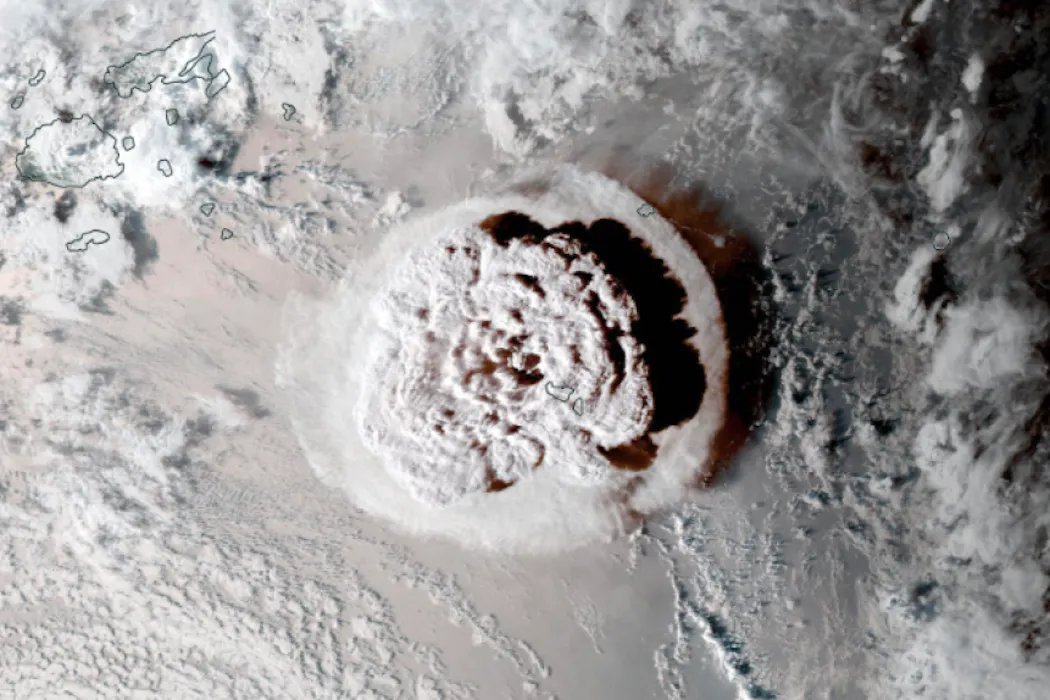
2022年1月汤加洪加火山喷发后,研究人员通过分析太平洋地区14个地震站的水下声波记录,发现了一个重要发现:最具破坏性的海啸并非源于火山爆炸本身,而是由海底火山口的突然塌陷所触发1。火山喷发在大气中产生了超过50千米的烟柱,事件造成至少3人丧生1。最具毁灭性的海啸发生在喷发开始后大约一小时,浪高达到18至40米1。
海底火山口塌陷发生在当地时间下午6:28左右,最终形成了约4公里宽、超过850米深的火山口1。研究人员检测到这次塌陷产生的巨大音波信号,这一信号即使在距火山2000多公里的地点仍然可以被探测到1。水下声波的传播速度约为每秒1.5公里,比海啸快7倍以上1。通过捕捉水下声波信号,可以在海啸到达前获得更长的预警时间,为火山海啸的早期预警提供了新的监测途径1。
Researchers analyzing the January 2022 eruption of Hunga Tonga have identified a promising new method for detecting deadly volcanic tsunamis before they strike. Analysis of underwater acoustic recordings from 14 seismic stations across the Pacific region revealed that the most destructive tsunami was not triggered by the volcanic explosion itself, but rather by the sudden collapse of the seafloor caldera.1
The Hunga Tonga eruption produced an ash column exceeding 50 kilometers in the atmosphere and claimed at least 3 lives.1 The most devastating tsunami struck approximately one hour after the initial eruption, with waves reaching heights of 18 to 40 meters.1 The seafloor collapse occurred around 6:28 p.m. local time, ultimately creating a volcanic crater approximately 4 kilometers wide and deeper than 850 meters.1
The underwater acoustic signals generated by this collapse proved detectable over distances exceeding 2,000 kilometers from the volcano, traveling at approximately 1.5 kilometers per second—more than seven times faster than the tsunami waves themselves.1 This significant speed advantage suggests that monitoring underwater sound waves could provide substantially earlier warning of approaching volcanic tsunamis, offering critical additional time for coastal communities to evacuate before dangerous waves arrive.
评论
还没有评论,欢迎留下第一条。