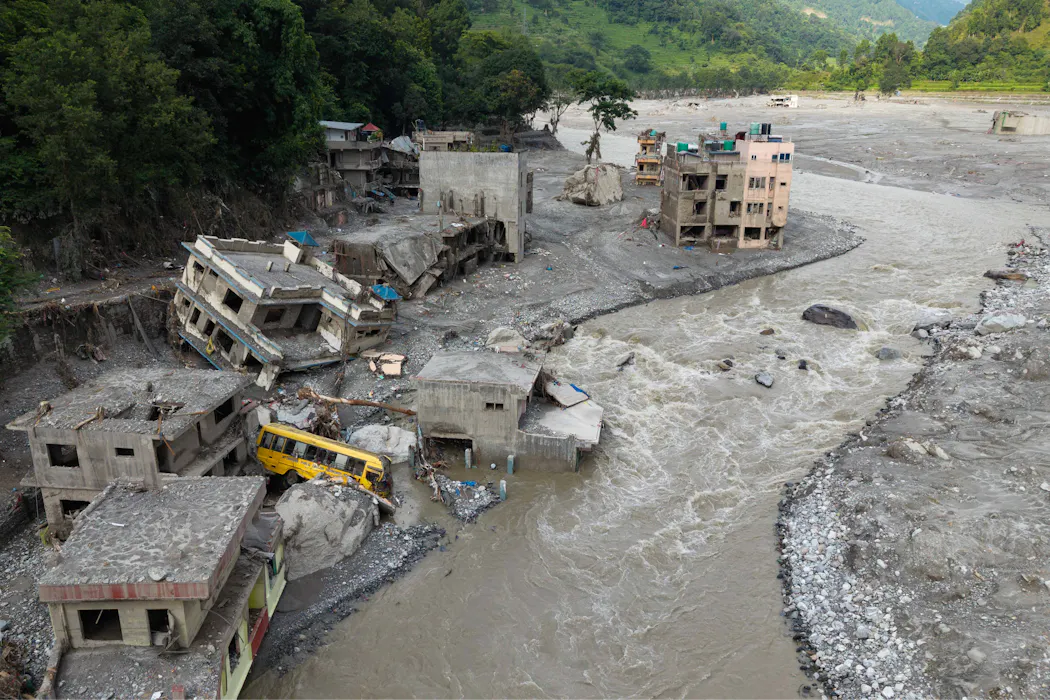
2024年8月26日,尼泊尔兰塘-丽仑峰附近发生大规模岩石冰川雪崩,约1000人死亡,数千人失踪1。岩石、冰和碎屑从山坡上坍塌,沿河谷向下游传播近100公里1。灾害引发的冰石流沿着比特卡西河爆发2,数十个印度家庭成员在灾难中失踪2。
研究表明,此次灾难源于气候变暖对山体的深层影响。在喜马拉雅高海拔地区,气候变暖正在融化永久冻土,导致山坡变得不稳定1。数据显示,86%的岩石冰川雪崩发生在坡度陡于30°、海拔3000米以上的斜坡,其中65%发生在永久冻土可能存在的地区1。类似灾难并非个案——2021年2月,印度查莫利地区曾发生岩石冰川雪崩,造成200多人死亡或失踪1。随着地区气温继续上升,未来类似的山体灾害可能频繁发生1。
A massive collapse of rock, ice, and debris near Langtang-Lirung Peak in Nepal on August 26, 2024, triggered a destructive torrent that devastated downstream communities 1. The material plummeted approximately 1,200 meters down the mountainside before flowing as a catastrophic ice-rock surge along river valleys for nearly 100 kilometers 1. The disaster claimed approximately 1,000 lives, with thousands more reported missing 12.
Research indicates this was a rock-glacier avalanche rather than a simple ice collapse, a distinction that underscores the changing nature of mountain hazards in the region 1. The surge traveled along the Bhote Koshi River, which flows from Tibet into Nepal, generating a deadly debris flow that affected both Nepal and India 2. Dozens of Indian families, including members from major cities ranging from Mumbai to Kolkata, posted appeals on social media seeking information about missing relatives 2.
Scientists have identified a troubling pattern: 86 percent of rock-glacier avalanches occur on slopes steeper than 30 degrees at elevations above 3,000 meters, and 65 percent happen in areas where permafrost likely exists 1. As temperatures in the Himalayan region continue to rise, warming is destabilizing mountain slopes by thawing permanently frozen ground, creating conditions that make such catastrophic failures increasingly probable 1. A similar rock-glacier avalanche in India's Chamoli district in February 2021 killed or left more than 200 people dead or missing, suggesting these events may become a recurring hazard in the warming Himalayas 1.
评论
还没有评论,欢迎留下第一条。