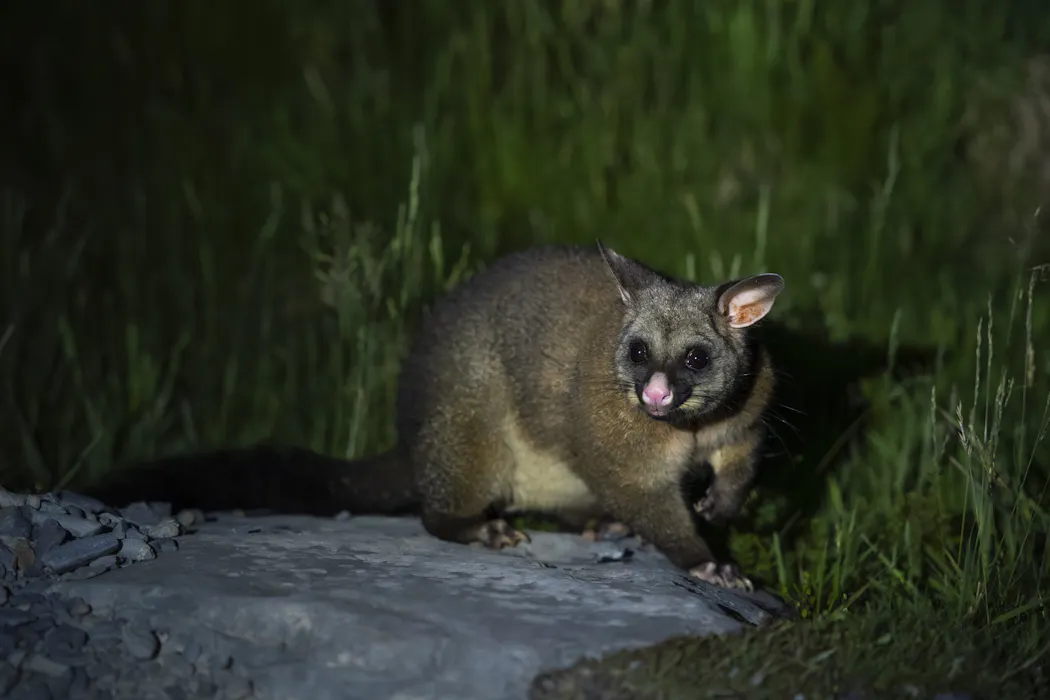
新西兰研究人员开发了一套基于人工智能的负鼠检测系统,通过分析森林录音自动识别剩余害兽1。该技术整合了录音设备和AI软件,能够在野生环境中准确定位难以根除的负鼠种群1。
为了提高识别精准度,研究团队创新应用了"交叉模型混淆映射"技术1。他们首先利用已训练识别超过6000种鸟类的BirdNET系统,找出与负鼠叫声最相似的鸟种1。随后,研究人员将这些容易产生混淆的鸟种作为"硬反面样本"用于模型训练1。这一方法大幅降低了误报率,相比之下,未采用该技术的模型在不含负鼠的森林录音上会产生数百次误报1。该系统在从未见过的真实森林录音上表现显著,即使遇到模型训练中未曾出现过的鸟种也能维持高检测准确度1。
这一技术未来还可能扩展应用于检测白鼬、鼠等其他入侵害兽物种1。
New Zealand researchers have developed an artificial intelligence method to identify possum calls through automated forest monitoring, enabling detection of remaining pest populations in wilderness areas 1. The innovation employs a technique called "cross-model confusion mapping," which uses the existing bird recognition system BirdNET—trained to identify over 6,000 bird species—to identify bird calls most similar to possum vocalizations 1. These acoustically similar bird species are then used as "hard negative samples" in model training, substantially reducing false alarm rates while maintaining high detection accuracy 1.
The approach proved effective when tested on real forest recordings previously unseen by the model, including bird species not encountered during training 1. Without this refinement method, untrained models generated hundreds of false positives when analyzing forest recordings containing no possums 1. Researchers indicate the technology may be extended to detect other invasive species including stoats and rats 1.
评论
还没有评论,欢迎留下第一条。