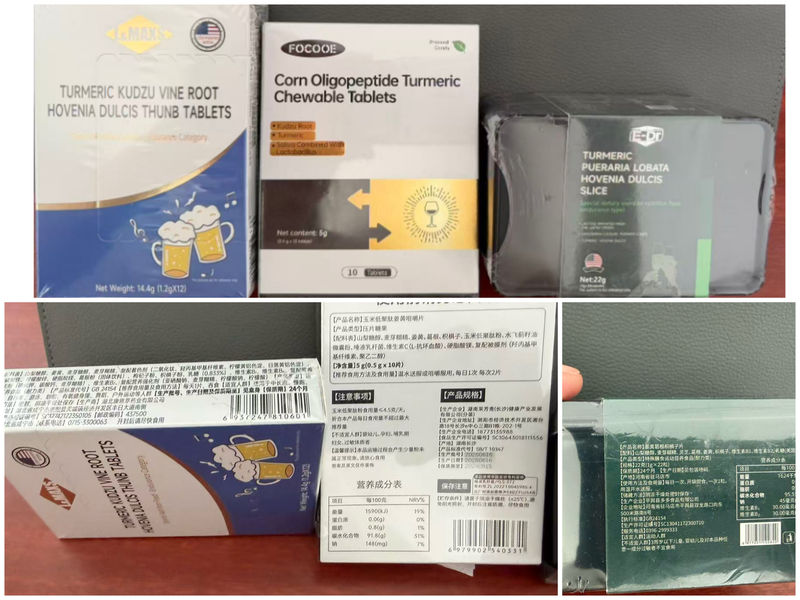
新京报调查发现,多个电商平台上存在大量解酒产品虚假宣传现象1。商家声称这些产品能够"3分钟快速解酒""边喝酒边解酒""千杯不醉"和"修复肝细胞"1,部分产品甚至以"美国进口"为噱头吸引消费者1。然而,这些所谓的"解酒药"实际上均为普通食品,其执行标准为GB 24154《食品安全国家标准 运动营养食品通则》或SB/T 10347《糖果 压片糖果》,根本不是药品1。
医学专家明确指出,人体对酒精的代谢速度是恒定的,不存在任何速效解酒产品1。北京大学肝研所副所长封波表示,人体平均每小时仅能代谢10~15毫升纯酒精,代谢效率由先天基因决定,"任何普通食品都无法激活、提升人体乙醇脱氢酶和乙醛脱氢酶的活性"1。商家展示的试验数据来源不明,多数以"商业机密"为由拒绝提供试验报告1。
根据《中华人民共和国食品安全法》第七十三条规定,食品广告不得含有虚假内容、不得涉及疾病预防治疗功能1。普通食品依法不得宣传保健、生理改善功效,"修复肝细胞"属于医疗相关描述,"千杯不醉"属于绝对化用语,均构成虚假宣传1。
An investigation by Beijing News In-Depth has uncovered widespread deceptive marketing of so-called alcohol-relief products on multiple e-commerce platforms1. Sellers claim their products can achieve "3-minute rapid alcohol relief," "drink without getting drunk," and "repair liver cells," yet these items are actually ordinary food products or sports nutrition foods—not pharmaceuticals1. Medical experts confirm that no such rapid alcohol-relief products exist scientifically, and these marketing claims constitute illegal false advertising1.
The products in question are classified under food safety standards GB 24154 (Sports Nutrition Food Guidelines) or SB/T 10347 (Candy and Compressed Tablet Candy) rather than pharmaceutical standards1. Some retailers falsely market their goods as "American imports," though they are manufactured domestically by companies such as Hubei Kang'en Cui Pharmaceutical Co., Ltd. and Henan Pingyu County Duoduo Food Co., Ltd.1. When questioned, merchants refuse to disclose their experimental data, citing "trade secrets" as justification1.
According to Dr. Feng Bo, Vice Director of the Liver Research Institute at Peking University, the human body metabolizes alcohol at a fixed rate, processing only 10-15 milliliters of pure ethanol per hour on average, with metabolic efficiency determined by genetic factors1. "No ordinary food can activate or enhance the activity of alcohol dehydrogenase and acetaldehyde dehydrogenase enzymes," he stated1. Legal experts further note that ordinary foods are prohibited from claiming health benefits or physiological improvements; describing products as capable of "repairing liver cells" constitutes medical-related claims, while "never get drunk" represents absolute language—both constitute false advertising1. The Food Safety Law of the People's Republic of China explicitly prohibits food advertisements from containing false content or claims related to disease prevention and treatment1.
评论
还没有评论,欢迎留下第一条。